

News
Four post-resident researchers will complete their clinical training at IIS La Fe with a contract to develop their research projects
The aim of this initiative is to promote high-quality clinical and biomedical research among those who have completed their specialist training. The projects have been approved by the IIS La Fe Research Committee and assessed by a citizens' panel made up of representatives from social organisations.
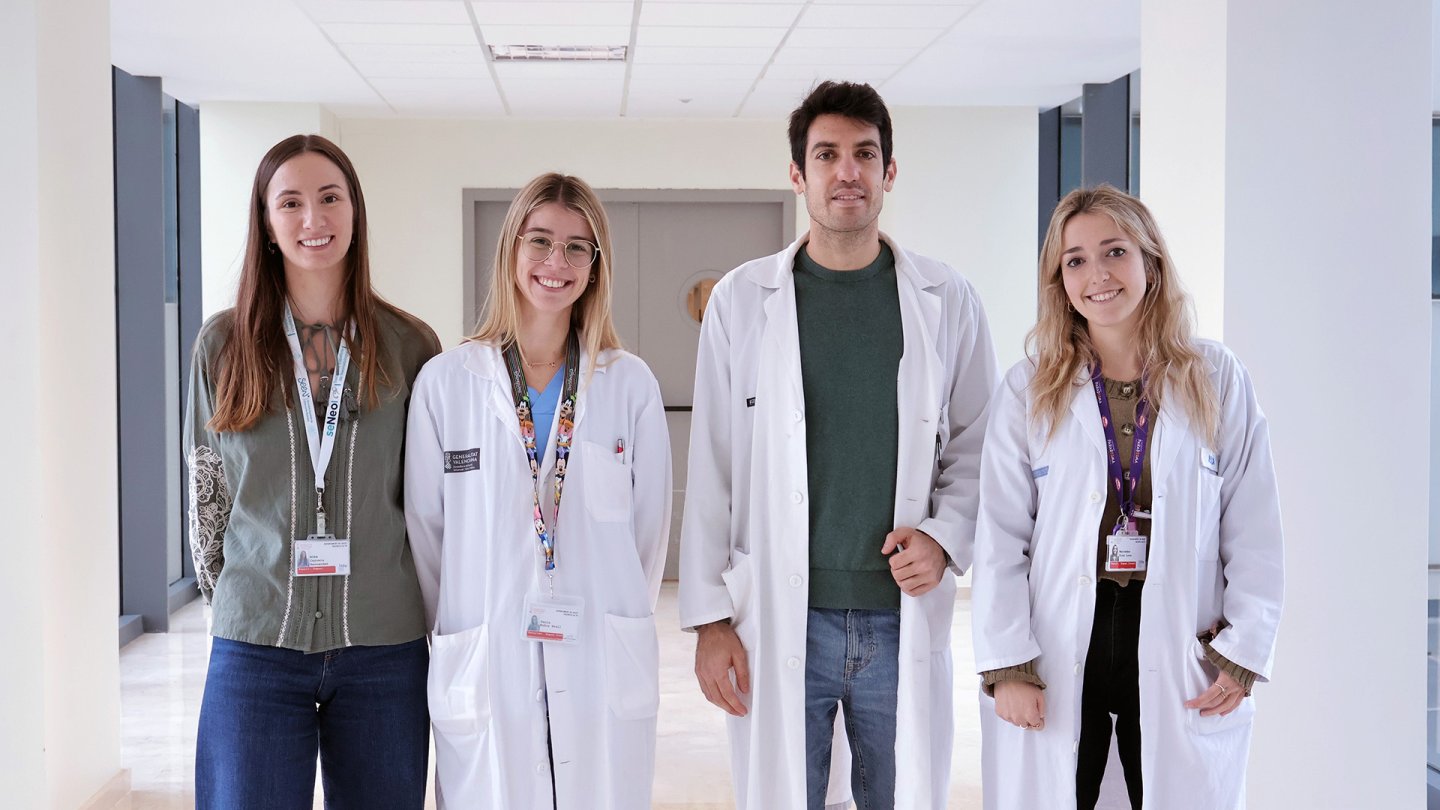
The Health Research Institute La Fe (IIS La Fe) has awarded four research contracts to post-resident professionals who have completed their specialist training. The purpose of this initiative is to promote and strengthen their research vocation through projects that they will carry out within IIS La Fe research groups over the next two years.
The young researchers have joined the Research in Perinatology (GIP), Severe Infection, Clinical and Translational Cardiology, and Chronic Diseases and HIV Infection research groups at IIS La Fe.
Over the next two years, they will launch four projects approved by the IIS La Fe Research Committee. These projects address topics such as differences in the composition of umbilical cord blood (UCB) and how these may influence the health of newborns; the study of an alternative technique to remove excess fluids in people with congestive heart failure; the identification of factors influencing complications in patients with common variable immunodeficiency (CVID); and the detection of fungal infections through new early diagnostic technologies.
Umbilical cord blood (UCB) as a therapeutic resource
Paediatrician Alba Cayuela aims, through her project, to analyse differences in the composition of umbilical cord blood (UCB) and how these influence the health of newborns, particularly the most vulnerable, such as premature infants or babies with congenital malformations requiring surgery.
Blood transfusions from adult donors to newborns can cause complications. For this reason, autologous transfusion of UCB - which consists of returning the baby's own umbilical cord blood - could become a safer alternative with fewer adverse effects. This approach could improve the clinical outcomes of patients while reducing the need for adult donor blood.
Ultrafiltration: an alternative for controlled fluid removal in patients with heart failure
Borja Guerrero, a cardiology specialist, proposes in his project the search for an alternative technique that allows fluids to be removed in a controlled way when medication is no longer effective. The aim is to consolidate, develop and extend the use of this technique, while also advancing knowledge of heart failure through the analysis of various biological parameters such as blood biomarkers, ultrasound imaging and the development of an anticoagulation protocol.
Heart failure is a common disease, and one of its symptoms is the accumulation of fluid in the body. When this occurs, the patient's health worsens and their quality of life decreases. In many cases, standard treatment relies on drugs that remove retained fluid, but sometimes this method is insufficient.
Immune dysregulation in common variable immunodeficiency (CVID) and its impact on cardiovascular risk
María de las Mercedes Díaz, a specialist in immunology, aims through her project to identify the factors that influence complications in people with common variable immunodeficiency (CVID).
CVID is a rare disease that affects the body's immune system. People who suffer from it not only experience more infections but also develop a chronic, silent inflammation that can damage the body. One consequence of this inflammation is the possible development of cardiovascular diseases, such as heart attacks or strokes.
Rapid detection of antifungal susceptibility and new immunological biomarkers in high-risk patients (OPTIFUNGI)
Pharmacist Paula Muñoz, specialised in microbiology and parasitology, aims through her study to develop an innovative solution: a strategy to diagnose fungal infections quickly, accurately and in a personalised manner by combining new technologies that allow the rapid identification of the type of fungus present, determine whether it is resistant to medication and analyse how the patient is responding through blood markers.
Severe fungal infections, such as invasive candidiasis or aspergillosis, particularly affect critically ill hospitalised patients and may put their lives at risk. These infections are difficult to diagnose and dangerous if not detected early. In addition, some fungi have developed resistance to medications, which further complicates treatment.
Share new


