

News
The 2nd IIS La Fe Cancer Research Conference connects science, innovation and public participation
The event brought together researchers, healthcare professionals, patients and associations to share advances in artificial intelligence, precision medicine and oncology innovation and address the needs of people affected by cancer.
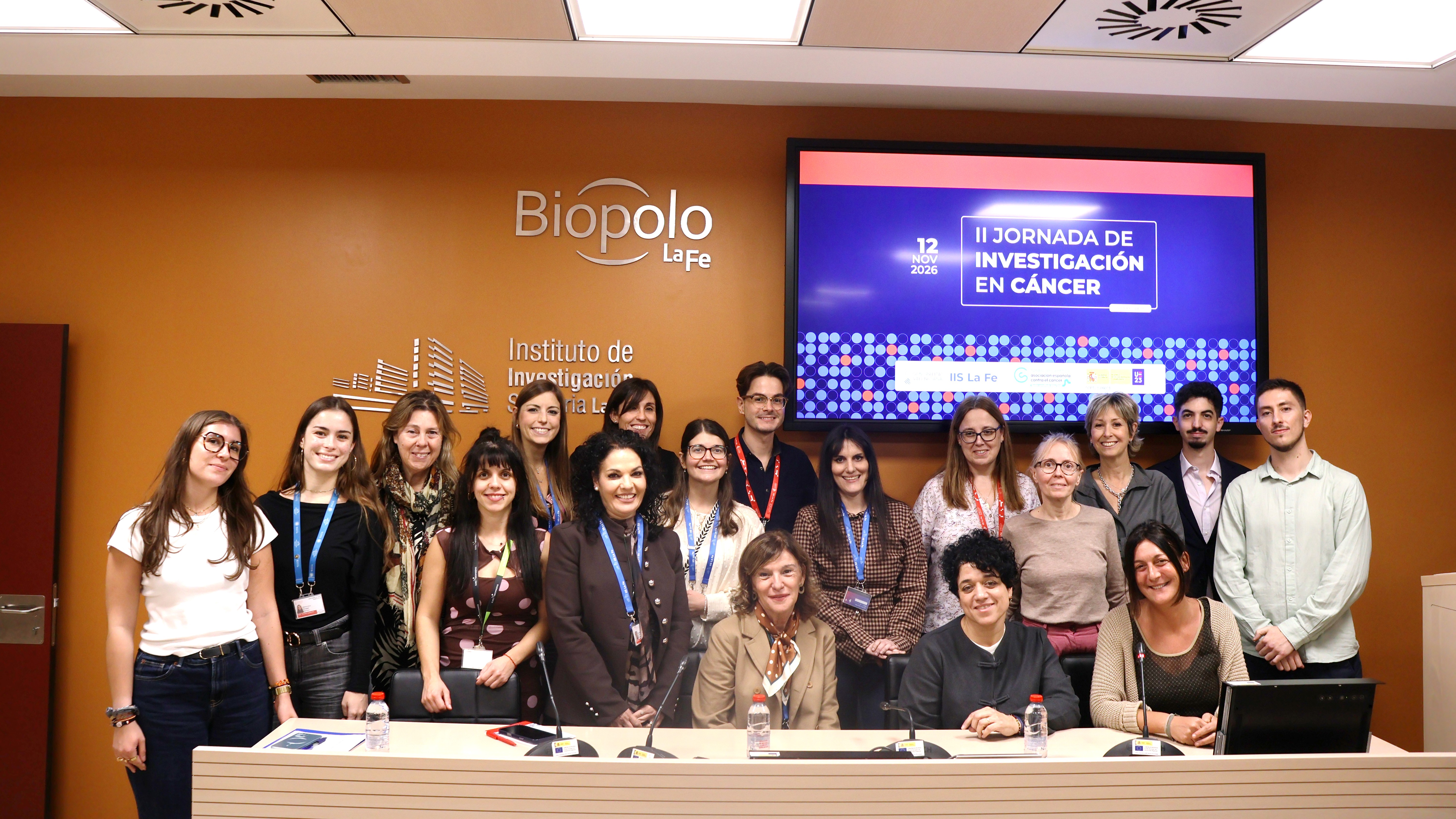
The La Fe Health Research Institute (IIS La Fe) held the 2nd IIS La Fe Cancer Research Conference on 12 November. The event brought together researchers, healthcare professionals, patients, associations and members of the public to share advances in oncology research and promote research that is more closely aligned with the needs of people affected by cancer.
Under the theme Scientific excellence, precision medicine and public participation to advance the fight against cancer, the programme combined scientific presentations, contributions from researchers at different stages of their careers, innovation and knowledge transfer projects, patient testimonies and participatory workshops.
In the field of oncology, IIS La Fe has 12 research groups, 21 principal investigators and 29 postdoctoral researchers. It also runs 49 commercial and 10 non-commercial oncology clinical trials, manages 57 active cancer-related projects and has two patents and a spin-off company specialising in this field.
The event took place within the framework of the La Fe Health Research Institute's accreditation as a Centre of Excellence in Oncology Research by the Scientific Foundation of the Spanish Association Against Cancer (Fundación Científica de la Asociación Española Contra el Cáncer, FCAECC). IIS La Fe is the only research centre in the Valencian Community to hold this accreditation, which recognises its scientific activity in oncology and helps strengthen collaboration, funding and the visibility of the Institute's research.
The initiative also formed part of the FORTALECE programme, promoted by the Carlos III Institute of Health. Within this framework, IIS La Fe received €2.5 million in funding over four years to improve the diagnosis, treatment and prediction of high-impact diseases through the development of precision medicine. Cancer is one of the programme's four priority areas, alongside ageing, neurodegenerative diseases and rare diseases.
Showcasing research talent
The scientific programme began with a presentation by Daniel Truhn, Professor and Head of the Clinical Artificial Intelligence Laboratory at University Hospital Aachen, who examined the past, present and future of large language models in medicine. Moderated by Luis Martí Bonmatí, the session explored the opportunities and challenges involved in incorporating these tools into research and clinical practice.
Another session showcased the work of researchers at different stages of their careers.
José Vicente Gil presented his research on optimising molecular diagnosis and studying the immune microenvironment in paediatric acute lymphoblastic leukaemia. Virginia Llopis discussed the role of the skin microbiota in the progression of cutaneous squamous cell carcinoma, while Nuria Benavent addressed the clinical relevance of NET levels in children and adolescents with cancer. The session was moderated by Pau Montesinos.
The Scientific Foundation of the Spanish Association Against Cancer also presented its Grants Programme, which supports oncology research and the development of scientific talent.
From scientific results to oncology innovation
The innovation and knowledge transfer session presented several initiatives aimed at turning scientific knowledge into solutions that can improve cancer prevention, diagnosis and treatment.
Sofía Cabezudo and Lucía Ferro, from the Scientific Foundation of the Spanish Association Against Cancer, presented the organisation's new pathway for identifying, maturing and transferring research results into oncology innovation.
Montserrat Carles presented VALENTINA INNOVA25, an initiative focused on transforming an identified need into a market-ready product proposal. Alba García presented a new strategy based on bispecific nanoparticles to enhance cancer immunotherapy.
The session, moderated by Mar Medá from the IIS La Fe Innovation Department, concluded with a presentation by Serena Pisoni entitled Closer to the tumour: can the location of cerebrospinal fluid improve molecular detection? The project won the 2026 IIS La Fe Innovative Ideas in Cancer Competition.
The programme also included a poster session on oncology research and innovation and a meeting with Silvia Flor, author of Mum's Pink Headscarf and winner of the Hortensia Roig Prize for Children's Literature.
Patient experience as part of research
The event featured a dialogue between cancer survivors and researchers on fertility- and sexuality-related after-effects and their impact on quality of life in adulthood. Moderated by Adela Cañete, the session connected clinical and research activity with concerns and needs that may persist after treatment.
The final part of the programme consisted of five participatory workshops that brought together patients, relatives, associations, members of the public, healthcare professionals and researchers. The discussions began with questions closely linked to the experiences of people with cancer and covered different stages of the disease and healthcare pathway.
The groups explored how medical imaging can help improve understanding of each patient's condition, how the most appropriate treatment is selected, why two people with the same cancer may experience different outcomes and how the disease and its treatment affect everyday life. The final workshop considered the value of patient experience and the use of data to improve care for people who may go through similar processes in the future.
This format helped make the Institute's lines of research accessible to society, encouraged the exchange of different perspectives and identified needs and opportunities for improvement based on the experiences of people affected by cancer.
As a shared activity, attendees contributed their reflections to a participatory wall centred on one key question: "What should science investigate further to improve the lives of people with cancer?"
Participation of the IIS La Fe Citizens' Committee
The IIS La Fe Citizens' Committee played an active role in the event as a permanent body for representation and dialogue between research and society. Established in 2026, the Committee aims to incorporate the perspectives of patients and the public into the Institute's research activity and forms part of the IIS La Fe Public Participation and Social Impact Plan 2026-2030.
Its participation helped raise questions and needs related to patient experience, assess the clarity of the scientific content and identify topics relevant to future activities and lines of research.
Through this second edition, IIS La Fe reinforces its commitment to oncology research based on scientific excellence, precision medicine, innovation and public participation. The event provided an opportunity to share scientific and clinical capabilities and strengthen dialogue among researchers, healthcare professionals, patients, associations and the public.
Share new


