

News
IIS La Fe promotes a common catalog to compare imaging biomarkers across hospitals
Researchers from the Health Research Institute La Fe (IIS La Fe) have contributed to the development of a proposal to standardize the description of imaging biomarkers, enabling them to be compared, validated and reused consistently across hospitals, research groups and regulatory bodies.
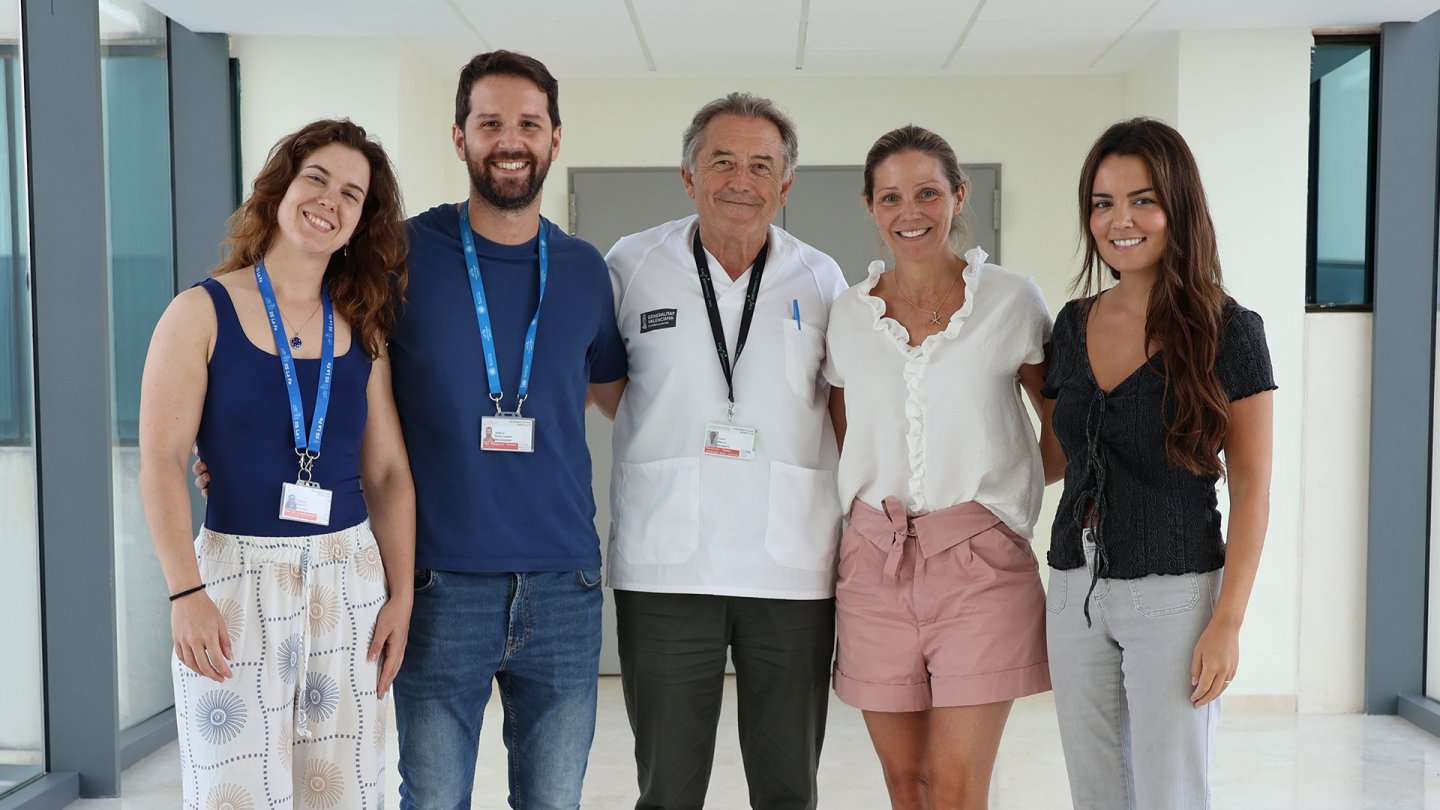
The study, published in Insights into Imaging, presents a common framework for cataloguing imaging biomarkers and defines the minimum set of information that should accompany any imaging biomarker obtained through techniques such as magnetic resonance imaging (MRI), computed tomography (CT), positron emission tomography (PET) or ultrasound.
Imaging biomarkers are quantifiable parameters extracted from medical images that provide information about a patient's health status, disease characteristics or response to treatment. Their use is becoming increasingly important in clinical research and personalized medicine, but their widespread adoption has been limited by the lack of common criteria for describing them.
At present, information on imaging biomarkers is often scattered across scientific publications, inventories, technical standards and regulatory documents. Moreover, the same biomarker may be described differently depending on the institution, disease, organ under study or imaging technology used. This lack of harmonization hinders the comparison of results, the reproducibility of studies and the translation of imaging biomarkers into clinical practice.
Pablo Rodríguez Belenguer, researcher in the GIBI230 Biomedical Imaging Research Group at IIS La Fe, explained that the main advantage of the proposal "is that it enables imaging biomarkers to be described and documented in a standardized way, regardless of the hospital, technological platform or clinical field in which they are used."
According to Rodríguez Belenguer, "standardization will help ensure that imaging biomarkers are measured and interpreted consistently across institutions, reducing methodological variability, facilitating the comparison of results and strengthening the generation of robust scientific evidence to evaluate new treatments."
A "universal dictionary"
The research team has developed a harmonized catalog of descriptors organized into five major domains: biomarker identification, clinical context, technical and imaging information, validation, and administrative data. Together, these fields answer key questions: what the biomarker is, what it is used for, how it is obtained, what evidence supports its use, and how it is maintained and updated.
The proposal is based on the internationally recognized FAIR principles-Findable, Accessible, Interoperable and Reusable-which aim to ensure that scientific data can be easily discovered, accessed, shared and reused. Applied to imaging biomarkers, these principles can facilitate their use in clinical trials, healthcare registries, regulatory processes and artificial intelligence systems.
IIS La Fe researcher Paula Doria Borrell emphasized that interoperability is a fundamental requirement because algorithms "need well-defined, comparable and traceable data in order to be trained, validated and deployed reliably. A standardized catalog facilitates information exchange between institutions, improves model reproducibility and increases transparency."
To assess the usefulness of the proposed framework, the researchers applied the catalog to four representative imaging biomarkers in inflammatory diseases: the apparent diffusion coefficient (ADC) in intestinal inflammation, the PET-FDG standardized uptake value (SUV) for large-vessel vasculitis, CT-derived radiomic signatures in systemic sclerosis-associated interstitial lung disease, and the Doppler ultrasound vascularization index in rheumatoid arthritis.
The results demonstrated that the same framework can be used to describe imaging biomarkers derived from different imaging modalities, organs and diseases, facilitating their comparison across diverse clinical settings.
The authors point out that this proposal represents a starting point towards a shared, scalable and sustainable resource. The article suggests that the next steps should focus on the external validation of the catalog, its refinement through user feedback and its pilot implementation in both clinical and research environments.
The ultimate goal is to provide a common tool that supports the use of imaging biomarkers in biomedical research, regulatory evaluation and clinical decision-making, in a context shaped by the rapid growth of personalized medicine and artificial intelligence applied to medical imaging.
Share new


