

News
La Fe Health Research and the Universitat de València develop an innovative formulation with the potential to protect against ionising radiation
The Health Research Institute La Fe (IIS La Fe) and the Universitat de València have developed an innovative formulation with the potential to protect the body against damage caused by ionising radiation. The breakthrough has been protected through a European patent and represents a further step in a research line with promising biomedical and biotechnological applications.
The formulation combines pterostilbene and silibinin, two compounds with recognised biomedical properties, and also allows for the incorporation of other complementary molecules to enhance both protection before radiation exposure and recovery from subsequent biological damage. It therefore represents a strategy with both radioprotective and radiomitigative potential, designed not only to prevent radiation-induced damage but also to reduce its biological effects after exposure.
Ionising radiation is a form of energy used in X-ray imaging and certain radiotherapy treatments. High levels of exposure can damage cells and tissues. The technology developed by IIS La Fe and the Universitat de València is particularly relevant because ionising radiation may cause severe damage to organs and tissues in both clinical settings and accidental exposure scenarios, while significant unmet medical needs remain in this field.
Despite advances achieved over recent decades, there are still no fully effective treatments for high-dose radiation exposure, including cases that may lead to acute radiation syndrome involving haematopoietic and gastrointestinal injury.
The formulation has been protected under the European patent Compositions and Methods for Preventing, Ameliorating or Reducing Radiation-Induced Diseases, further highlighting the scientific, innovative and international value of this research.
A research line with strong translational potential
Alongside the development and protection of this technology, the collaboration between IIS La Fe and the Universitat de València has continued to generate scientific findings with promising biomedical applications. Among them is a preclinical study of an oral therapy based on pterostilbene and silibinin that increased survival in mice by up to 90% following exposure to a lethal dose of ionising radiation, without reducing the effectiveness of radiotherapy against highly aggressive tumours.
Although these findings are still at the preclinical stage, they reinforce the value of a research line aimed not only at expanding scientific knowledge but also at translating it into solutions with the potential to improve healthcare. The protected technology may be developed into pharmaceutical, nutraceutical, cosmetic or food products, with multiple routes of administration, including topical applications, which are particularly relevant for protecting the skin and mucous membranes in specific clinical settings.
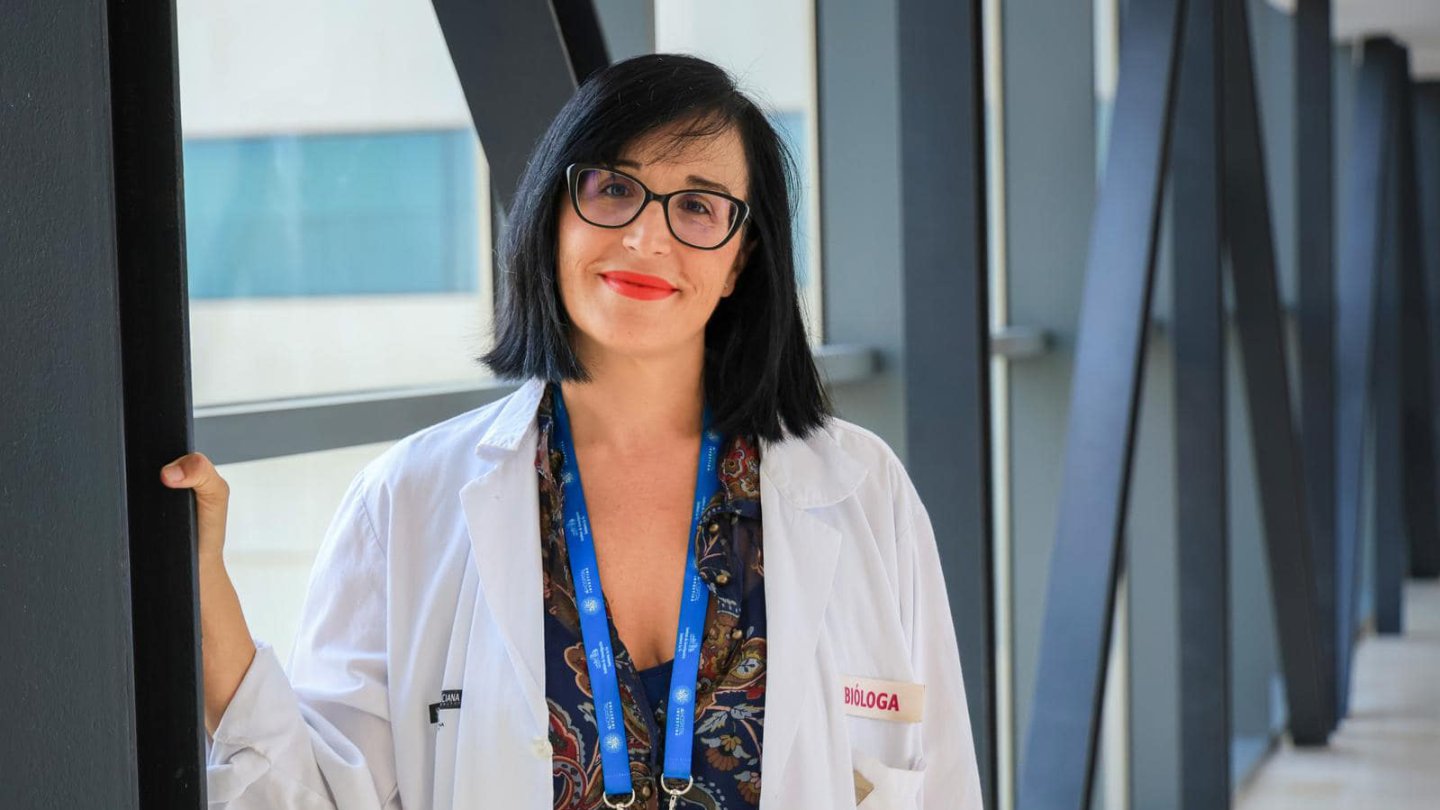
Dr Alegría Montoro, researcher at the Radiation Protection Service of Hospital Universitari i Politècnic La Fe and member of the GIBI230 research group at IIS La Fe, explained that the wide range of potential applications makes this research "an example of translational innovation capable of connecting laboratory research, clinical practice and the productive sector."
Science, healthcare and innovation
The technology transfer activities arising from this research have also fostered collaboration with CIRCE Health Science, a biotechnology company focused on developing solutions related to cellular resilience and healthy ageing. Part of the knowledge generated through the collaboration between the Universitat de València and IIS La Fe has contributed to the development of products marketed under the IOVE brand.
The invention reflects the collaborative work carried out between IIS La Fe, the Universitat de València and the innovation and technology transfer ecosystem. Representing IIS La Fe as inventor is Dr Alegría Montoro Pastor, from the Biodosimetry Laboratory of the Radiation Protection Service at Hospital Universitari i Politècnic La Fe and researcher in the GIBI230 research group.
Representing the Universitat de València, the inventors are José María Estrela, Elena Obrador and Rosario Salvador, members of the Unitat de Fisiopatologia Cel·lular (UFC) research group within the Department of Physiology at the Faculty of Medicine of the Universitat de València, to which Dr Montoro also belongs.
In addition to the European patent, the invention has been protected or extended in several countries, including the United States, Japan, South Korea, Australia, Canada, China and Mexico, reinforcing the strategic and international scope of the intellectual property protection achieved.
Share new


