

News
La Fe Health Research Institute takes on scientific coordination of SCOPE-AI, a €20.6 million European project to validate artificial intelligence in cancer
The La Fe Health Research Institute (IIS La Fe) in Valencia has been selected by the European Commission to take on the scientific coordination of SCOPE-AI, one of the major European projects aimed at promoting the use of artificial intelligence in cancer and accelerating its implementation in clinical practice.
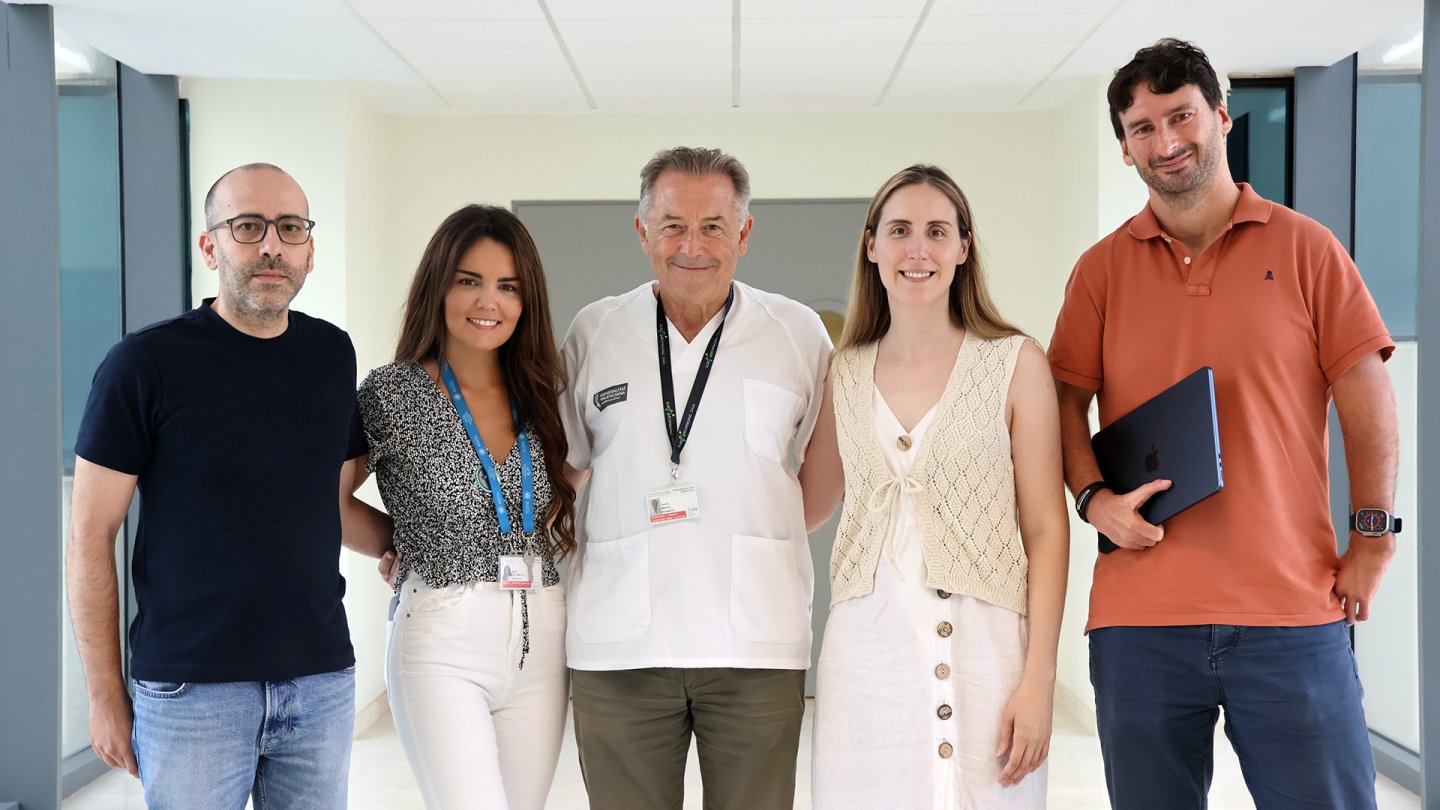
The initiative, called SCOPE-AI - SCaling Oncology Pilots across Europe with imaging and AI, is funded under the DIGITAL-2026-AI-09 programme, AI Continent - Solutions for Cancer, and has a total budget of €20.6 million, of which €12.3 million comes from the European Commission.
The main objective of the project is to advance the clinical validation of 15 multimodal artificial intelligence solutions applied to oncology, developed using medical imaging and other complex clinical data. These tools will be evaluated under real-world conditions in eight European hospitals, with the aim of generating evidence on their safety, performance and usefulness in supporting medical decision-making.
From research to real-world impact for patients
SCOPE-AI was created to address one of the main challenges facing digital medicine: moving artificial intelligence algorithms from experimental or laboratory environments into effective use in hospitals and real-world healthcare systems.
To this end, the project will promote multicentre clinical validation studies to assess how these solutions perform in different healthcare settings. The tools included in SCOPE-AI will progress from intermediate levels of technological maturity to advanced stages of readiness for clinical deployment.
The project will address use cases related to screening, diagnosis, tumour characterisation and treatment planning across different types of cancer. This approach will make it possible to generate robust, reproducible and transferable evidence for clinical practice.
In addition, SCOPE-AI will contribute to strengthening the European EUCAIM - Cancer Image Europe infrastructure, expanding its capabilities in interoperability, clinical validation and impact assessment. In this way, the project will help consolidate a European ecosystem for cancer data and artificial intelligence.
IIS La Fe's scientific leadership
IIS La Fe, through its Biomedical Imaging Research Group (GIBI230), will coordinate the scientific aspects of the project and lead activities related to advanced data management, interoperability, quality and clinical validation of artificial intelligence solutions.
The project's principal investigator at IIS La Fe, Leonor Cerdá Alberich, will coordinate the scientific activities related to data and artificial intelligence. Luis Martí-Bonmatí, an internationally recognised expert in radiology and medical imaging innovation, will contribute his expertise in integrating AI solutions into complex clinical environments.
"This project represents a milestone for IIS La Fe and for digital health research in Spain. Leading the scientific coordination of SCOPE-AI will allow us to translate decades of experience in medical imaging and artificial intelligence into real-world impact for cancer patients across Europe," said Dr Cerdá Alberich.
IIS La Fe's leadership in SCOPE-AI builds on its previous participation in major European initiatives such as EUCAIM, where it has provided scientific coordination, and COMPASS-AI, where it has led pilot activities. This track record has established the institute as one of the key players in building the European cancer data ecosystem.
IIS La Fe is also one of the consortium's most heavily involved partners, with a contribution and budget exceeding €1 million.
A European consortium to validate AI in oncology
SCOPE-AI brings together 35 organisations from 11 European countries, including university hospitals, research centres, universities, technology SMEs and European organisations specialising in biomedical imaging and artificial intelligence.
Participating partners include leading institutions such as the German Cancer Research Center (DKFZ), Amsterdam UMC, Aristotle University of Thessaloniki, QUIBIM and the European Institute for Biomedical Imaging Research (EIBIR), among others.
Evaluating the technologies across eight European clinical centres will make it possible to assess their applicability in different healthcare systems and clinical settings, a key factor in advancing towards the safe, ethical and effective adoption of artificial intelligence in oncology.
SCOPE-AI is aligned with the main European strategies in health, innovation and digital transformation, including the Europe's Beating Cancer Plan, the European Health Data Space (EHDS) and the European Apply AI strategy.
The project will help accelerate the adoption of artificial intelligence tools in healthcare, facilitate compliance with the future European regulatory framework for AI and strengthen European digital sovereignty in the health sector.
SCOPE-AI will also establish a governance model designed to integrate with future European digital infrastructures, ensuring the long-term sustainability of the data, services and tools developed in the field of cancer.
Share new


