

News
An international study led by IIS La Fe develops the first tool to predict long-term mortality after pneumonia
An international study led by the La Fe Health Research Institute (IIS La Fe) has developed the first internationally validated tool capable of stratifying the risk of long-term mortality after pneumonia.
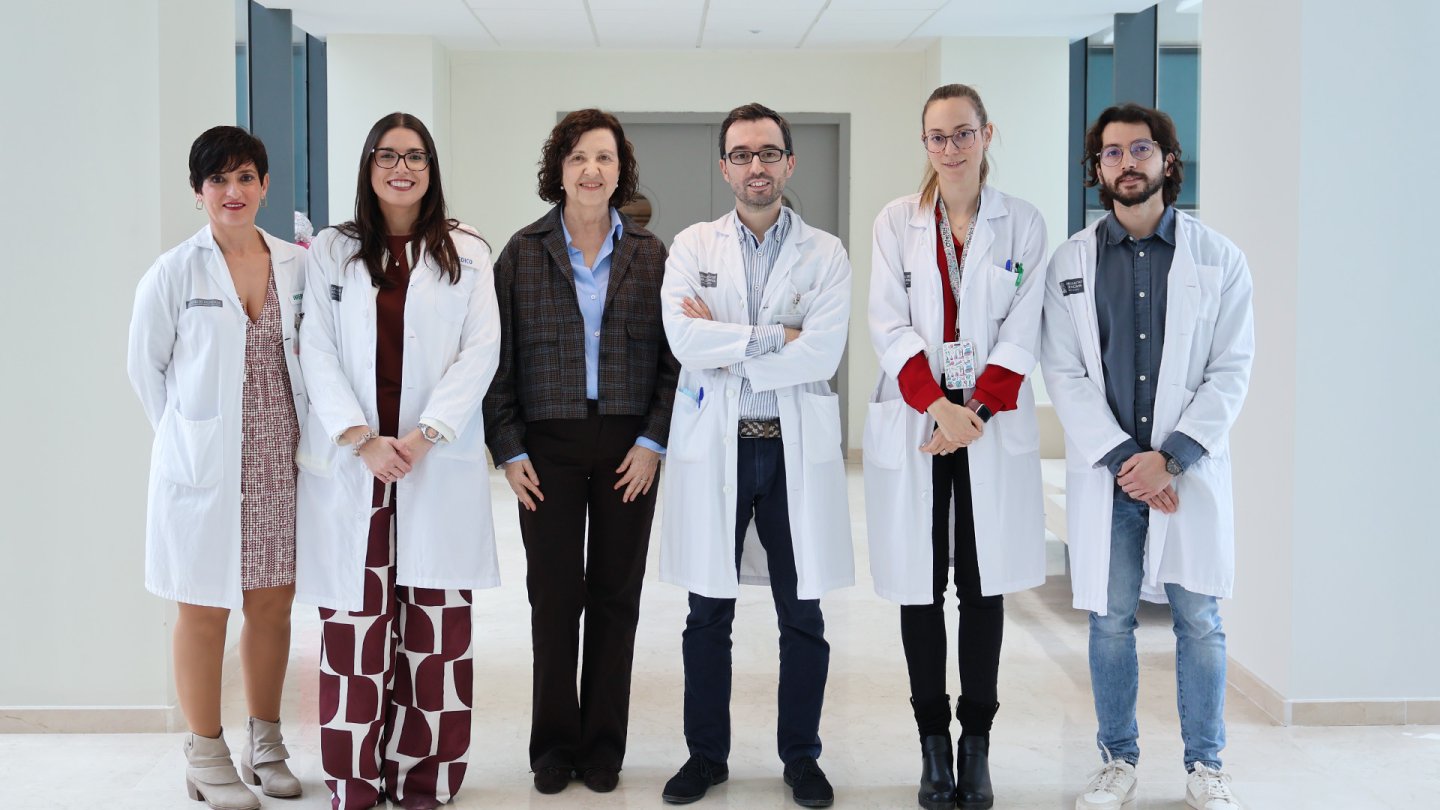
The study, published in the American Journal of Respiratory and Critical Care Medicine, was carried out in collaboration with the Universitat Politècnica de València, the German CAPNETZ consortium, and the non-profit healthcare group Intermountain Health (United States). Overall, the model was validated in more than 8,000 patients across different countries and healthcare systems.
Community-acquired pneumonia (CAP) is one of the leading causes of hospitalisation and mortality in adults. Although severity scores are available to assess patients during hospital admission, until now there had been no robust, internationally validated tool capable of anticipating which patients would remain vulnerable after discharge.
The new index, called the Long-term Pneumonia Mortality Index (L-PMI), works as a clinical "risk calculator": using routinely available variables - such as age, smoking status, chronic diseases, initial severity of the episode, need for mechanical ventilation, or cardiovascular complications during hospitalisation - it classifies patients into low-, intermediate-, or high-risk groups for mortality in the year following discharge.
Risk stratification and a new clinical approach
The study results show clear differences between the groups defined by the L-PMI index. In the development cohort, patients classified as low risk had a mortality rate of less than 1% in the year following discharge, whereas mortality in the high-risk group exceeded 20%. This difference reflects the tool's ability to identify, from the moment of hospital discharge, those patients with the greatest medium-term vulnerability.
The study also introduces a shift in clinical perspective: CAP should not be understood solely as an acute episode limited to hospital admission, but rather as an event that may have prolonged systemic consequences, particularly cardiovascular ones.
The researchers point out that the early identification of the most vulnerable patients could enable closer post-discharge follow-up and provide a basis for future preventive strategies and clinical trials aimed at reducing long-term mortality.
About community-acquired pneumonia
Community-acquired pneumonia is one of the leading causes of hospitalisation and mortality in adults worldwide. In Spain, it has an estimated incidence of between 2 and 10 cases per 1,000 inhabitants per year - rising to more than 25 per 1,000 among people over 65 years of age - reflecting its considerable public health impact.
Although medical attention has traditionally focused on the acute phase - during hospital admission - several studies have shown that the risk does not disappear after discharge. In fact, patients who have had pneumonia face an excess risk of mortality in the following months, particularly during the first six months, and in many cases due to cardiovascular causes.
Until now, however, there had been no internationally validated tool capable of accurately identifying which individuals would remain vulnerable after overcoming the initial episode.
Méndez, R., González-Jiménez, P., Latorre, A., Piqueras, M., Mengot, N., Hervás, D., Knox, D., Carr, J., Barten-Neiner, G., Rohde, G., Pletz, M. W., Rupp, J., Witzenrath, M., Dean, N. C., & Menéndez, R. (2026). The long-term pneumonia mortality index: An international multicenter derivation and validation study for patients with community-acquired pneumonia. American Journal of Respiratory and Critical Care Medicine. https://doi.org/10.1093/ajrccm/aamag060
Share new


