

News
The IIS La Fe leads a study showing improved outcomes in urgent liver transplantation for acute liver failure over the last two decades
The La Fe Medical Research Institute (IIS La Fe) has led a Spanish multicentre study showing that outcomes following urgent liver transplantation for acute liver failure have improved significantly over the last two decades.
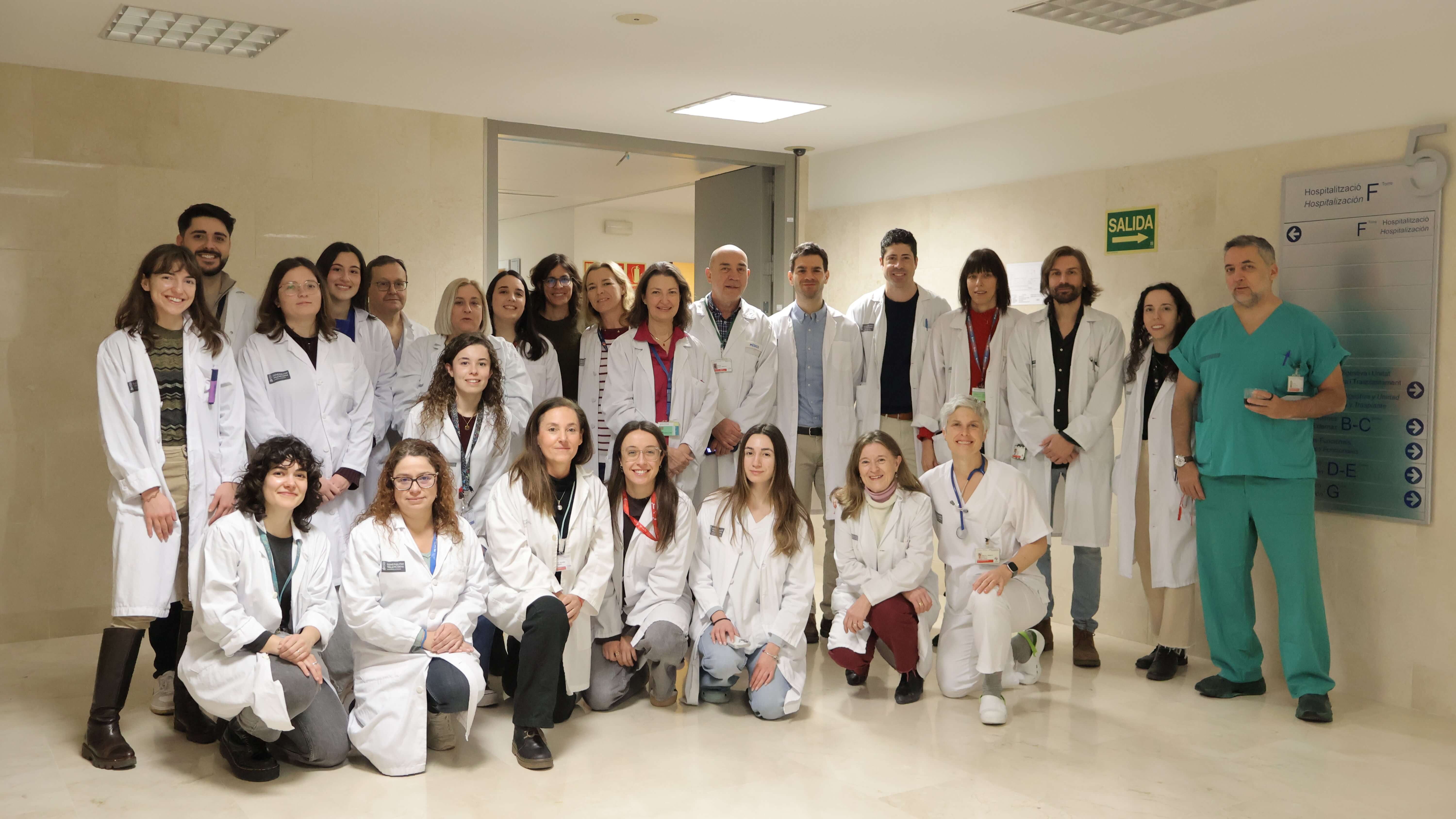
The study, coordinated by the Hepatology and Liver Transplant Unit at Hospital Universitari i Politècnic La Fe, under the direction of Dr Isabel Conde, researcher in the IIS La Fe and CiberEHD Hepatology, HPB Surgery and Transplantation Research Group led by Dr Marina Berenguer, analysed the evolution of causes, clinical characteristics and post-transplant outcomes across 11 referral centres throughout Spain.
This retrospective study included 217 adult patients who underwent transplantation between 2001 and 2020, comparing data from two periods (2001-2010 vs 2011-2020). The main findings include an improvement in overall survival at 1, 5 and 10 years, reaching 82%, 78% and 72%, respectively, in the most recent decade. This improvement was associated with a reduction in major complications such as chronic kidney disease, cardiovascular events and mortality.
Despite these advances, the study also identified an increase in post-transplant infections during the second decade, probably related to more intensive immunosuppressive regimens. In addition, predictors of poorer 1-year prognosis were identified, including arterial hypertension, pre-transplant acute kidney injury and hypernatremia on the day of transplantation.
The study also found that the main causes of acute liver failure leading to transplantation were indeterminate forms (26.7%) and autoimmune causes (26.3%), followed by viral aetiologies. In the temporal analysis, an increase in autoimmune hepatitis and drug-induced liver injury (DILI) was observed, while hepatitis B declined.
The results of this study highlight the importance of collaboration among Spanish centres, as the integration of data from 11 hospitals has provided a representative overview of the current situation of urgent liver transplantation for acute liver failure in Spain. This contributes to improving clinical practice, risk stratification and the optimisation of perioperative management for these patients.
Conde Amiel, I., Martínez Delgado, S., Bosca Robledo, A., Senosiáin Labiano, M., Martín Mateos, R. M., Almohalla Álvarez, C., González Diéguez, M. L., Lorente Pérez, S., Otero Ferreiro, A., Rodríguez-Soler, M., Herrero, J. I., Aceituno, L., Fernández Yunquera, A., Berenguer, M., & Aguilera Sancho-Tello, V. (2025). Trends in Liver Transplantation for Acute Liver Failure in a Spanish Multicenter Cohort. Transplant international: official journal of the European Society for Organ Transplantation, 38, 15185. https://doi.org/10.3389/ti.2025.15185
Share new


